


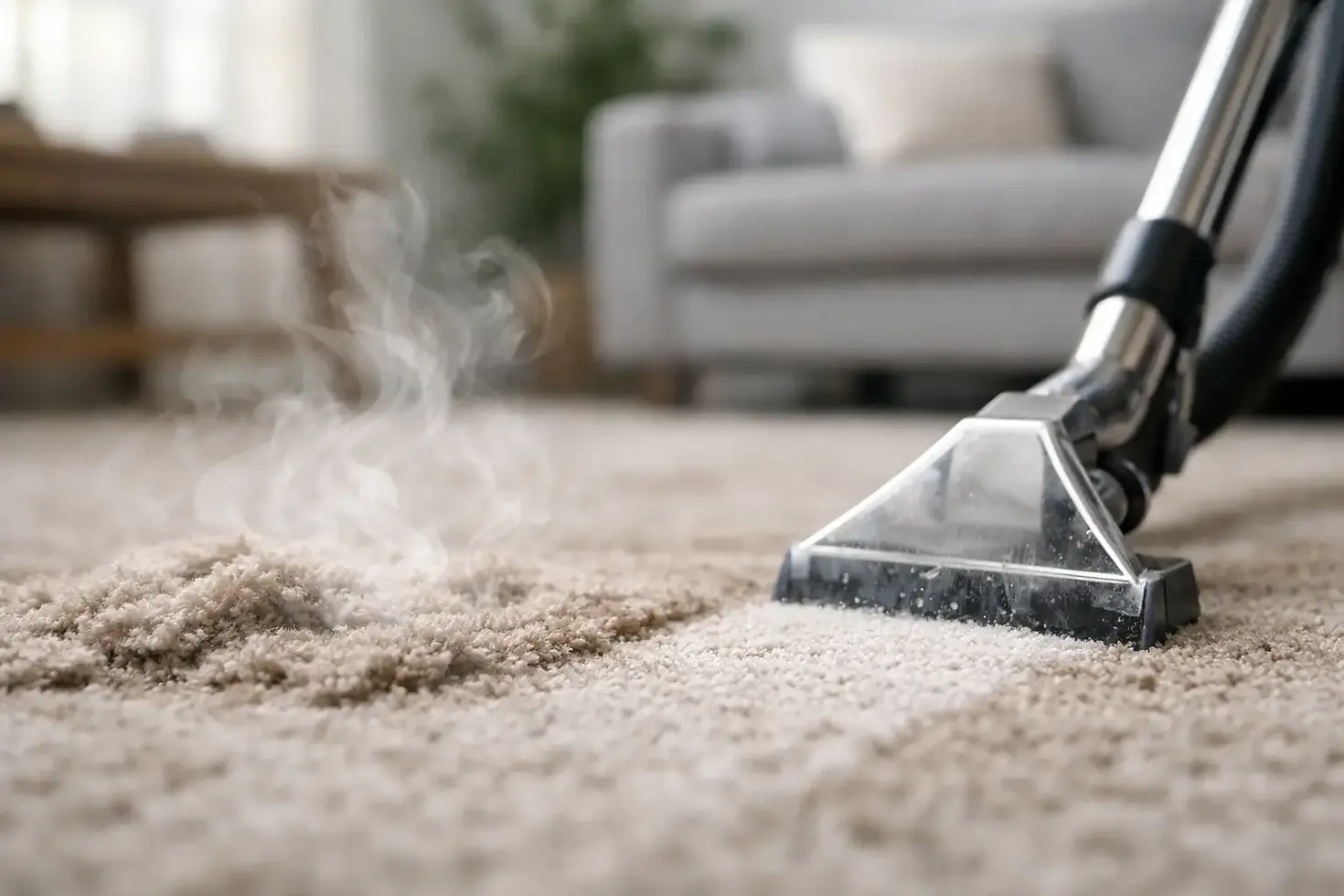
Why Do Carpets Smell After Cleaning?

You book a carpet cleaning to make your home feel fresher, then a few hours later the room smells worse than it did before. If you have ever wondered why do carpets smell after cleaning, the short answer is that cleaning can expose odours that were already in the carpet, and moisture can make them more noticeable if the carpet does not dry fast enough.
That smell does not always mean the carpet was cleaned poorly. But it does mean something in the carpet, underlay, or cleaning process needs a closer look. In most homes, the cause comes down to trapped moisture, residue, bacteria, pet contamination, or soil that has been disturbed and lifted to the surface.
Why do carpets smell after cleaning in the first place?
Carpet holds more than visible dirt. It traps oils, food spills, pet accidents, dust, and everyday organic material deep in the fibres and backing. When those materials get wet during cleaning, they can release odours that were less noticeable when the carpet was dry.
This is especially common in high-traffic areas, family rooms, bedrooms, and homes with pets. A carpet can look fine from the surface but still contain a build-up below. Once hot water and cleaning solution reach that build-up, the smell can temporarily intensify.
In some cases, the odour fades as the carpet dries. In other cases, the smell sticks around because the real issue was never fully removed.
The most common reason is slow drying
Wet carpet has a smell. That part is normal. What matters is how long it stays wet.
If too much water is left behind, damp fibres and backing can create a musty or sour odour. This is often what homeowners notice after a low-powered cleaning or a DIY rental machine. These machines may put down a fair amount of water but do not recover it effectively, leaving the carpet overly damp for too long.
Professional hot water extraction should clean deeply without soaking the carpet. Strong suction makes the difference. High heat and pressure help break up soil, but strong extraction is what removes moisture, suspended dirt, and cleaning agents from the carpet.
Drying conditions also matter. A carpet in a cool basement or a room with poor airflow will dry more slowly than one in a bright room with moving air. On humid days, drying takes longer as well.
What slow drying smells like
A damp carpet odour is usually musty, stale, or slightly sour. It often becomes stronger when the room is closed up. If the smell improves steadily over 12 to 24 hours, lingering moisture was likely the main issue.
If it gets worse after that, there may be a deeper contamination problem in the carpet or underpad.
Residue can make odours hang on
Not all carpet cleaning leaves the carpet equally clean. One of the biggest reasons a carpet smells off after cleaning is detergent residue left in the fibres.
Residue acts like a magnet for soil. It can also hold onto odour-causing particles instead of flushing them out. In the short term, leftover product may create a soapy, stale, or chemical smell. Over time, it can make the carpet resoil faster and start smelling dirty again much sooner than it should.
This is one reason water quality and rinse quality matter. Ultra-purified, pH-balanced soft water helps cleaning agents work more effectively and rinse more completely. That means less residue left behind and a better finish overall. Cleaner fibres also tend to feel softer underfoot, which is exactly what most homeowners want after paying for a professional service.
Pet accidents are often the real culprit
If a carpet smells worse after cleaning and the odour has an ammonia, urine, or strong organic note, pet contamination is a likely cause.
Here is what happens. Old urine deposits can dry into the carpet and underpad. While dry, they may be less noticeable. During cleaning, moisture can reactivate the salts and bacteria in those deposits, making the smell stronger again.
A standard surface clean will not always solve that. If the contamination has reached the backing or underlay, the source remains below the visible carpet fibres. In that case, deodorizer alone will only mask the issue for a while.
This is where proper diagnosis matters. Some odours need targeted urine treatment, flushing, or sub-surface work. If the damage is severe or repeated in the same area, replacement of the underpad may be the only real fix.
Mildew and bacteria can develop below the surface
When carpet stays damp too long, microbial growth becomes a risk. This is more likely if the carpet was already holding organic matter, had previous spills, or sits in an area with limited airflow.
Bacteria and mildew do not always create a dramatic smell right away. Sometimes the room just smells dull, heavy, or stale. Other times the odour is clearly musty. Either way, if moisture remains in the carpet backing or underpad, the problem can continue even when the surface feels dry.
This is why deep extraction matters so much. A carpet should not just be washed. It should be thoroughly rinsed and recovered.
Wicking can bring hidden soil back to the top
Another reason homeowners ask why do carpets smell after cleaning is something called wicking. This happens when moisture in the carpet pulls deeper soil, spills, or contaminants upward as the fibres dry.
You might notice this as spots that reappear after cleaning, but it can happen with odours too. The carpet seems fine at first, then a smell returns the next day. That does not necessarily mean the carpet was not cleaned. It may mean there was deeper contamination in the backing that rose back up during drying.
Heavily soiled carpets, old spills, and pet areas are the most common places for this to happen.
DIY machines often make the problem worse
Homeowners rent carpet machines for convenience, but the results are often mixed. The issue is not effort. It is equipment.
Rental units usually lack the heat, pressure control, and most importantly the suction needed for a true deep clean. They can leave too much water in the carpet and fail to remove enough of the loosened soil. In practical terms, that means the carpet stays damp longer and may smell worse after the job is done.
Overuse of store-bought shampoo can add another layer of residue. A carpet that has been cleaned multiple times with consumer products may hold a build-up that needs a proper professional rinse to fully clear out.
How to reduce carpet odour after cleaning
The first priority is drying. Open windows if conditions are dry outside, turn on fans, and keep the air moving. If you have air conditioning or a heat pump, use it to help pull humidity out of the room. Avoid walking on the carpet more than necessary while it dries.
If the smell is mild and fades as the carpet dries, there is usually no cause for concern. But if the odour is strong, concentrated in one area, or still present after a full day, it is worth following up.
A professional cleaner should be able to tell the difference between normal post-cleaning dampness and a deeper odour issue. In many cases, the answer is a more thorough flush, better extraction, or targeted deodorizing treatment rather than simply adding fragrance.
When the smell points to a bigger issue
Some post-cleaning odours are temporary. Others are a warning sign.
If the smell is musty for more than 24 to 48 hours, if pet odours become stronger, or if the same areas keep smelling after repeat cleanings, the problem may be in the carpet backing, underpad, or even the subfloor. At that stage, surface cleaning alone may not solve it.
This is where choosing the right service matters. Powerful truck-mounted extraction gives a much better chance of removing moisture, soil, and odour from deep in the carpet. That is a major advantage over weaker systems that leave too much behind. For homeowners in Kelowna and West Kelowna, that difference can be the line between a carpet that feels fresh and one that smells damp by the next morning.
The real goal is not just a clean-looking carpet
A carpet should look cleaner, smell fresher, dry properly, and feel better underfoot after service. If it does not, something was left behind - moisture, residue, or the source of the odour itself.
That is why the best carpet cleaning is not about flooding the fibres with more water or covering the smell with perfume. It is about using the right heat, the right rinse, and the strongest possible extraction to deliver a true deep clean.
If your carpet smells after cleaning, do not assume that is just normal. Sometimes it is temporary. Sometimes it is a sign the carpet needs a more complete job. Either way, a fresh carpet should actually smell fresh once it is dry, and your home should feel better, not questionable.


Comments