


Does Steam Cleaning Leave Residue in Carpets?

A carpet can look cleaner straight after an appointment but feel stiff, sticky, or attract dirt again within days. That is why homeowners ask, does steam cleaning leave residue? Proper professional steam cleaning should not leave residue behind. When residue is present, it usually points to too much cleaning solution, poor rinsing, weak extraction, or a previous cleaning method that did not fully remove soil and detergent.
For Kelowna and West Kelowna homes, the difference comes down to the cleaning process and the equipment used to finish the job. High heat loosens embedded soil. Cleaning agents break down oils and stains. Strong suction then removes the dirty water, loosened debris, and solution from the carpet. Skip that last part, or do it poorly, and carpets can feel less clean than they should.
What residue feels like after carpet cleaning
Residue is not always visible. It may show up as a slightly crunchy texture underfoot, a sticky feel in traffic areas, or carpet fibres that seem to become dirty again quickly. Some homeowners notice dark paths reappearing where people walk most often. This is commonly called rapid resoiling.
The issue is simple: detergent left in carpet fibres can act like a magnet for dust, pet hair, outdoor soil, and everyday oils. A carpet may initially look bright because surface dirt has been lifted, then lose that fresh appearance as new soil clings to the leftover product.
Residue can also be confused with old wear patterns or soil that was never fully removed. High-traffic areas often contain years of compacted grit, body oils, and fine dust. A light cleaning may improve the appearance without fully flushing those contaminants out. The carpet is not necessarily coated in fresh residue, but it still needs a deeper clean.
Does steam cleaning leave residue when it is done correctly?
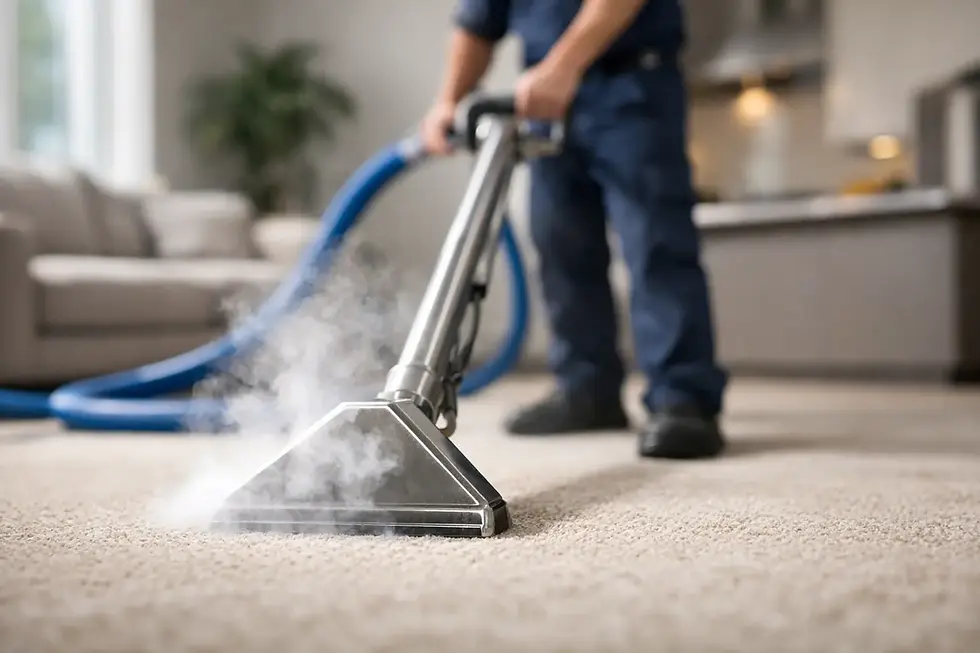
No. A properly performed hot water extraction service is designed to rinse and extract cleaning agents, along with the soil they release. Although many people call it steam cleaning, professional carpet cleaning generally uses heated water and controlled cleaning solutions rather than dry steam alone.
The goal is not to soak the carpet. It is to apply enough heat, water, and solution to loosen contamination, then recover that moisture efficiently. The best result is carpet that feels clean, soft, and fresh once dry - not sticky, crunchy, or heavily perfumed.
There is an important trade-off. More cleaning solution is not automatically better. Heavily soiled carpet may need targeted pre-treatment, but the technician must match the product and dilution to the fibre type, stain, and level of soil. The carpet must then be thoroughly rinsed and extracted. Strong cleaning is only valuable when it is followed by strong recovery.
Why residue happens
Residue problems are usually caused by process, not by steam cleaning itself. DIY rental machines can be useful for small spills, but many lack the heat and vacuum power needed to flush and remove moisture from deeper in the pile. They may leave behind a mixture of water, detergent, and loosened soil.
Low-powered cleaning equipment can create a similar problem. If a machine sprays more moisture than it can recover, carpet stays wet longer and the cleaning solution may remain in the fibres. Slow drying can also contribute to musty odours, especially in dense carpet, humid conditions, or rooms with limited airflow.
Overuse of store-bought spot cleaners is another common cause. These products can help in a pinch, but applying them repeatedly without rinsing can leave a soapy patch that attracts dirt. If one area gets darker again and again after spot treatment, the product buildup may be part of the problem.
Hard water can make matters worse. Minerals in untreated water can reduce cleaning-agent performance and leave fabrics feeling less soft. That is one reason water quality matters during professional cleaning. Ultra-purified, pH-balanced soft water supports a more effective clean and helps reduce the chance of residue remaining in the carpet.
The professional difference: heat, pressure, and suction
A professional result depends on more than a cleaning wand and a bottle of solution. The system needs enough heat to help break down oily soils, enough pressure to reach into the carpet, and enough vacuum power to recover the dirty water quickly.
Truck-mounted equipment is built for this type of deep cleaning. It delivers serious cleaning power while providing strong extraction at the end of each pass. That extraction is what helps prevent residue and reduces drying time. Instead of leaving loosened dirt and detergent in the carpet, the system pulls them out.
At ProClean Canada, powerful truck-mounted equipment is paired with ultra-purified, pH-balanced soft water to provide a deeper rinse and a cleaner finish. This matters for carpets, area rugs, and upholstered furniture alike. Fabrics should feel refreshed and softer to the touch, not coated with product.
No cleaning method can reverse permanent fibre damage, bleach spots, or heavy wear. However, a thorough professional clean can remove the soil that dulls carpet colour, traps odours, and makes fibres lie flat. It is a practical way to restore comfort and appearance without leaving behind a detergent film.
How to tell if your carpet has cleaning residue
The clearest sign is rapid resoiling. If carpet looks good on cleaning day but develops dark traffic paths quickly, residue may be attracting new dirt. A sticky or stiff feel is another warning sign, particularly if it appears in spots where a cleaner was applied heavily.
Before assuming the latest cleaning caused the issue, consider the carpet's history. Previous DIY treatments, old shampoo-based cleaning, and repeated spot-cleaning attempts can leave buildup that a later service has to work through. In some homes, the first professional extraction removes a large amount of old product and soil, while a follow-up clean may be needed for exceptionally neglected areas.
Odour is different from residue, although the two can occur together. A carpet with pet accidents, food spills, or moisture problems may need odour treatment in addition to cleaning. Covering the smell with fragrance does not remove the source. Effective treatment targets the contamination, then rinses and extracts it.
What to do after steam cleaning
Give the carpet time to dry fully before judging the finish. Depending on carpet thickness, soil level, weather, and airflow, drying can take several hours. Keep air moving by opening windows when conditions allow, running the furnace fan, or using ceiling fans. Avoid walking on the carpet with outdoor shoes while it is damp.
Once dry, vacuum thoroughly. This lifts the pile, removes dry particulate matter, and helps your carpet feel its best. If you notice persistent stickiness, stiff patches, or fast-returning soil, contact the cleaning provider promptly. A reputable professional should want to assess the result and address a legitimate concern.
Between professional appointments, blot spills instead of scrubbing them. Use small amounts of an appropriate cleaner and avoid saturating the carpet. For recurring stains, especially pet-related spots, professional treatment is often the better choice than adding more product at home.
A cleaner carpet should stay cleaner
Steam cleaning does not have to leave residue. When cleaning agents are properly measured, fibres are thoroughly rinsed, and powerful extraction removes the dirty solution, carpet is left cleaner rather than coated. The same principle applies to upholstery: clean deeply, rinse properly, and recover the moisture.
If your carpet feels sticky after a past cleaning or seems to get dirty again far too soon, it is worth having the condition assessed instead of layering on another store-bought product. The right deep clean can remove the buildup already in the fibres and leave your home feeling fresher, softer, and ready for everyday life.


Comments